
Why Summer Ramp-Up Injuries Happen, and How to Avoid Them
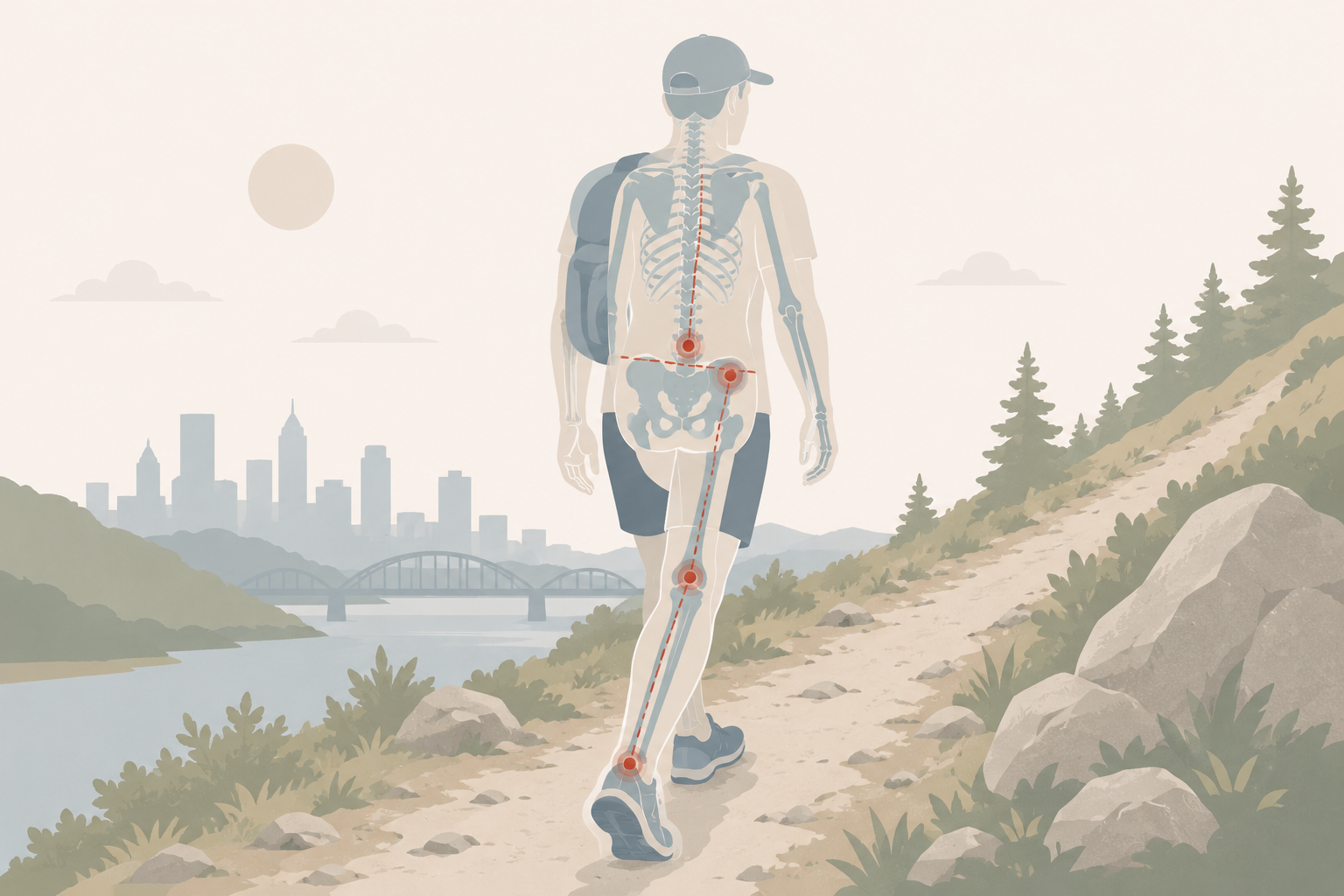
Summer in Pittsburgh has a way of inspiring ambition. The weather is right, the days are long, and suddenly the running shoes that sat in the closet all winter are back in rotation. People who haven't hiked since last fall are planning weekend trips. Cyclists are back on the trails. Weekend sports leagues are in full swing.
All of that is genuinely great, as movement is one of the most important things you can do for your long-term structural health. But there's a pattern that shows up in practice every summer without fail: people ramp up too fast, too soon, and a structural abnormality that was manageable becomes much harder to ignore.
The Structural Problem With Sudden Ramp-Ups
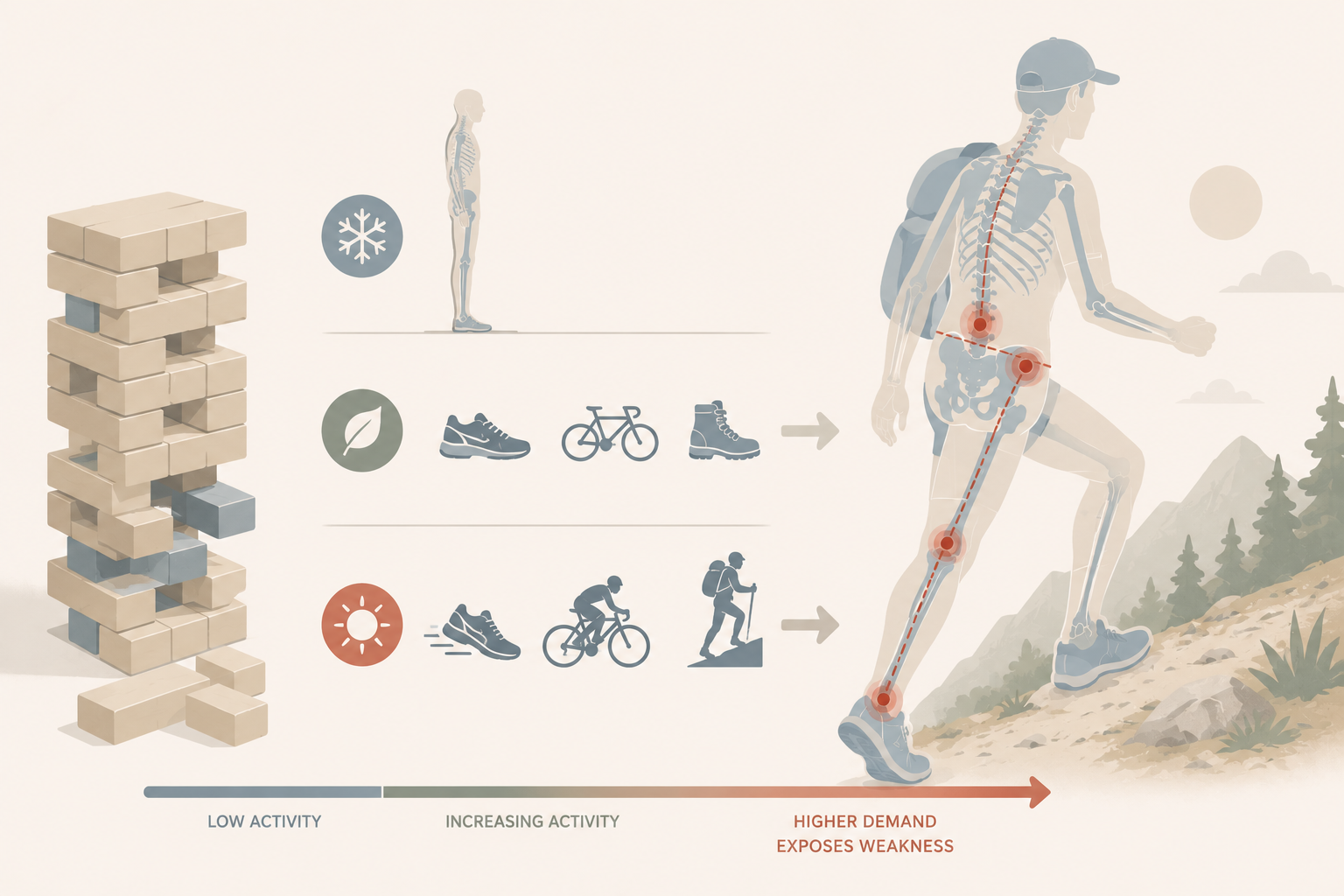
When you've been relatively sedentary through the fall and winter, your connective tissues like the ligaments, tendons, and spinal discs lose some of their resilience and load tolerance. Your muscles weaken in the stabilizing roles they play around the spine. Structural abnormalities that were compensated for during low-activity periods become exposed under increased demand.
Think of it like the late stage of a Jenga game. The tower holds together fine when it's intact. But once enough blocks have been removed toward the base, adding more weight to the top, even a small block, can be the one that brings it down. Summer ramp-up injuries work the same way. They're rarely caused by a single dramatic event, even though it may feel that way. They're more often the cumulative result of repeatedly loading a structurally compromised system that wasn't ready for the demand placed on it.
What to Watch for With Specific Summer Activities
Running
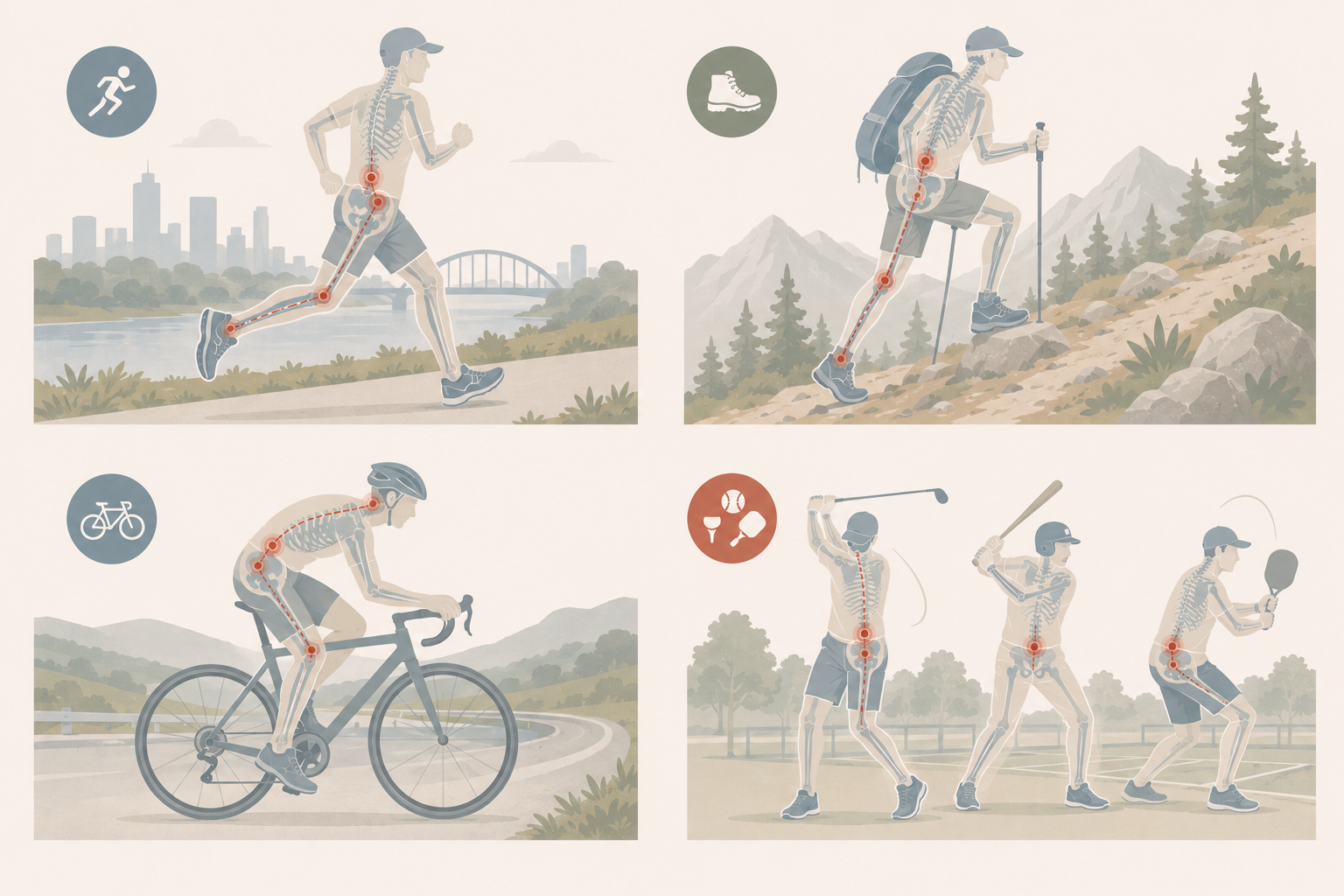
Running is a great way to get outside. However, it's also high-impact and highly repetitive. The same structural forces repeat thousands of times per mile. If there's an existing pelvic imbalance or lumbar shift, running amplifies that asymmetric loading with every stride. Start with shorter distances, prioritize even surfaces, and pay attention to any one-sided hip, knee, or low back complaints that emerge. These consistently point to an asymmetric structural abnormality that we can address.
Hiking
Hiking is one of the best forms of exercise available, uneven terrain demands dynamic stabilization from the spine and hips that flat-surface walking simply doesn't require. Add elevation change and a weighted pack and you have a significant structural challenge. When your structure is up for it, hiking is exceptional low-impact exercise. The descent, however, is often the most taxing part, compressive and shear forces through the lumbar spine increase substantially on the way down. Build up gradually and invest in supportive footwear with good ankle stability.
Cycling
Cycling involves sustained spinal flexion for extended periods, particularly in the thoracic and cervical spine. Road cyclists especially tend to spend hours in a forward head, rounded upper back position that directly compounds Anterior Head Syndrome (AHS) and thoracic kyphosis. Bike fit matters enormously here. A proper fit that keeps the spine in a more neutral position dramatically reduces the structural cost of long rides.
Recreational Sports
Golf, softball, tennis, and pickleball are rotational sports that place significant torsional demand on the lumbar spine and pelvis. The explosive, asymmetric nature of these movements means existing structural shifts get loaded hard and fast. A proper dynamic warm-up is non-negotiable for these activities, it can be the difference between a great afternoon and a week of recovery.
How to Ramp Up Smart This Summer
Start at 50–60% of what you think you can handle for the first two weeks and let your connective tissues adapt before pushing intensity or duration. Always warm up dynamically through full range of motion before any activity involving explosive or rotational movement.
Pay close attention to asymmetric complaints, pain or fatigue that consistently shows up on one side. This is a structural hint to take seriously rather than pushing through. Incorporate your FLIP exercises regularly, especially if your activity involves prolonged flexion postures like cycling or kayaking, to maintain the cervical curve between sessions.
And don't wait until something breaks down to check in. If you're ramping up activity and you know there's an existing structural abnormality, staying current on your correction plan is the smartest investment you can make in your summer.
The goal is a full, active summer, not one cut short by something entirely preventable. Move well, build gradually, and pay attention to what your body is telling you structurally.
If you're getting back into activity this summer and want to know where your structure stands before you push harder, a complimentary consultation is a great place to start. Tap the button below to find a time that works for your schedule.