
Tech Neck Is a Summer Problem: What Screen Time Does to Your Spine
School's out, and with it goes the built-in structure that keeps screen time in check. Desks, schedules, physical activity, and device limits all go out the window for the next few months. What replaces them, couches, beds, and floors with phones, tablets, and laptops, creates one of the most structurally damaging patterns we see in practice, particularly in younger patients.
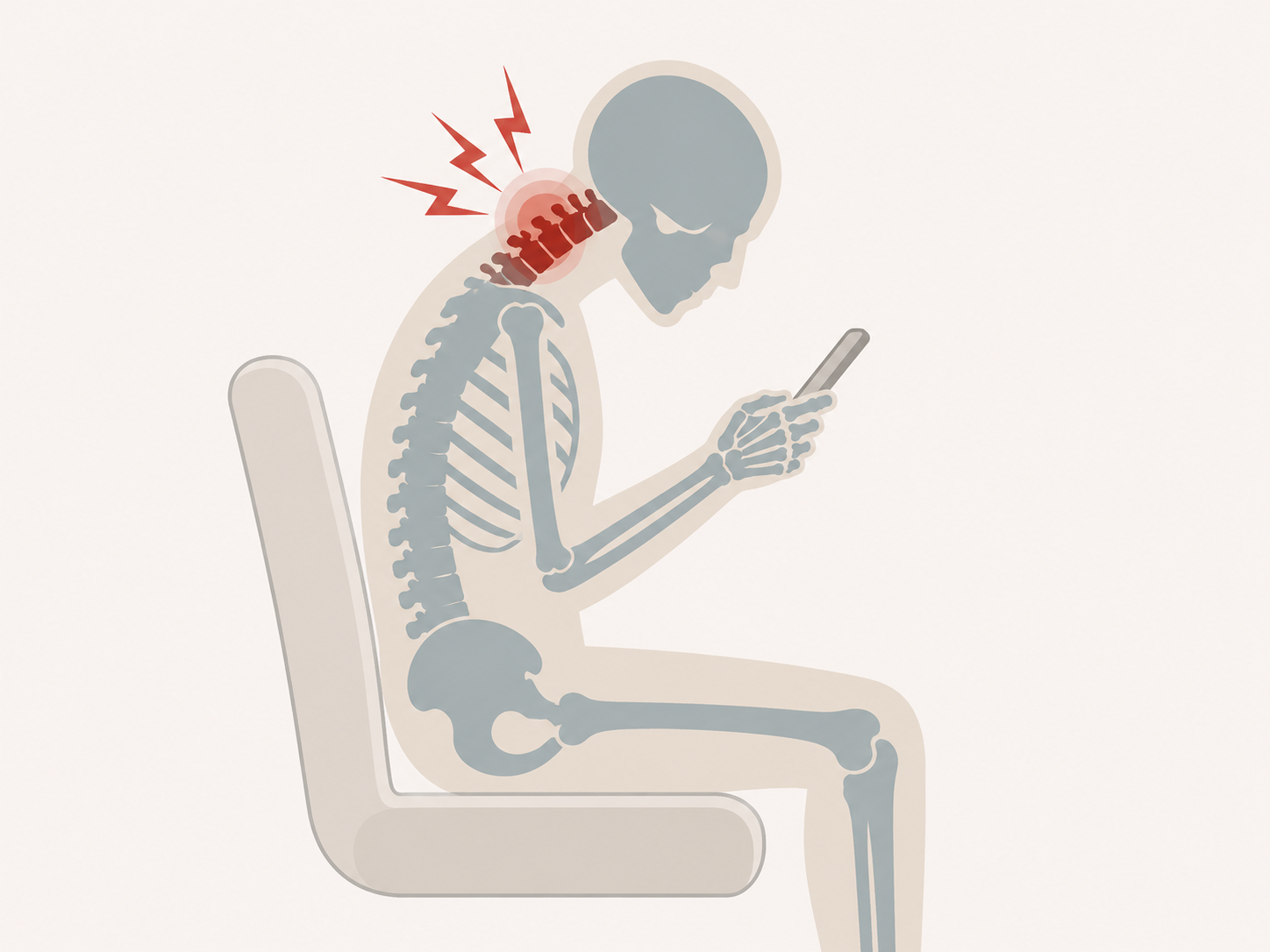
That pattern has a clinical name: Anterior Head Syndrome (AHS), more commonly known as tech neck. And summer is when it accelerates.
The Physics of an Anterior Head Shift
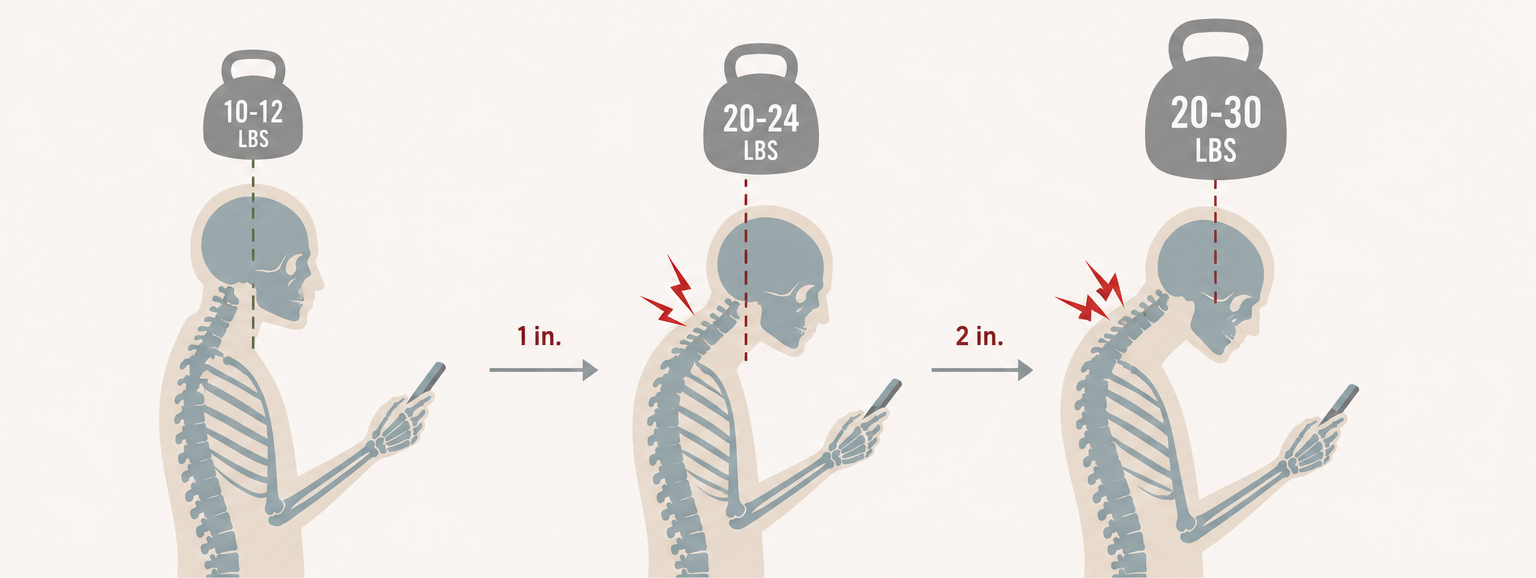
Your head weighs approximately 10–12 pounds in a neutral position. But for every inch it drifts forward from that neutral point, the effective load on the cervical spine roughly doubles. At just two inches of forward translation, which is common in habitual phone users, the cervical spine is managing an effective head weight of 20–30 pounds. That's the equivalent of a Thanksgiving turkey on your neck.
Sustained under that load, the cervical curve, which should have a natural forward arc, begins to straighten and eventually reverse. The concerning part is that this structural change typically accumulates over months and years before any symptoms appear. By the time someone notices it, the pattern is well established.
Why Summer Makes This Worse
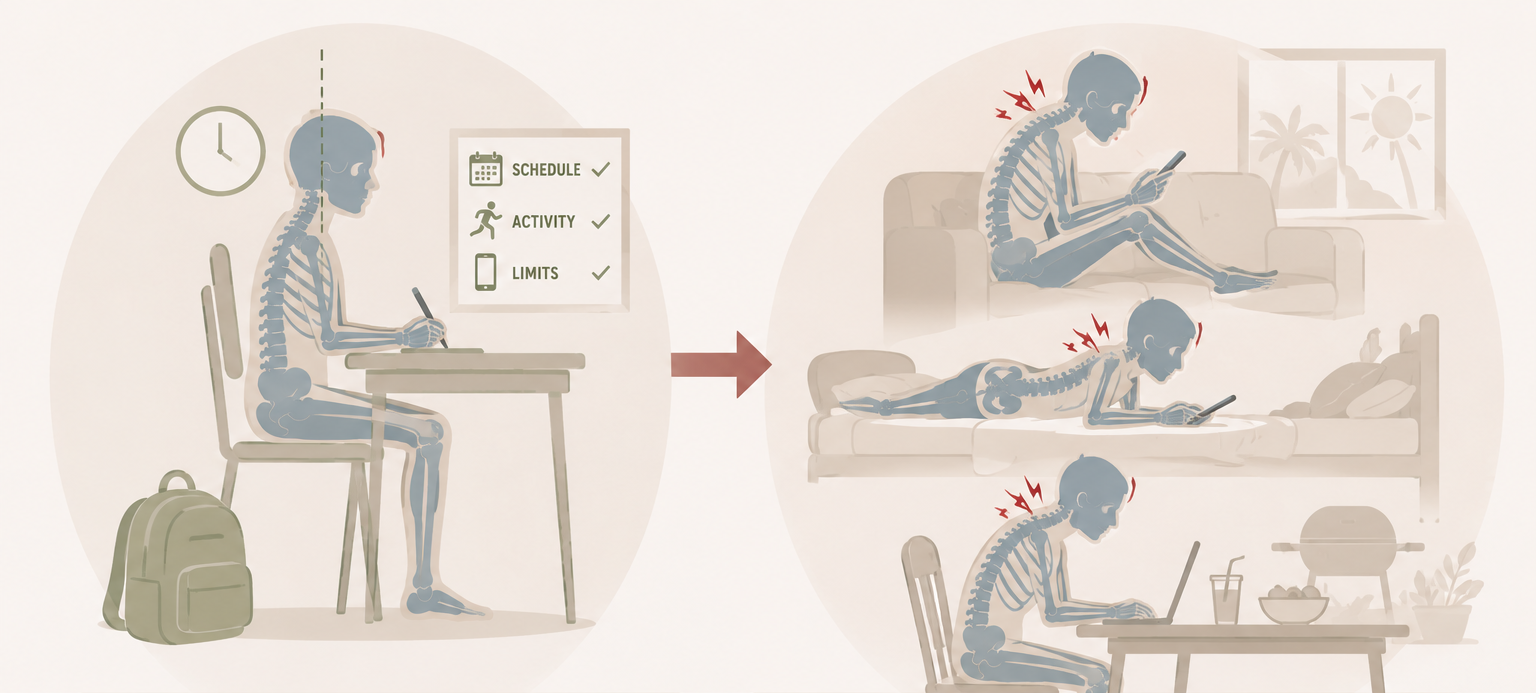
During the school year there's built-in structure: desks, schedules, physical activity, and limits on device time. Summer removes most of that. Kids and teens migrate to couches, beds, and floors with their devices. Adults work from patios and kitchen tables without proper ergonomic setup. The result is longer stretches of forward head posture in worse positions, with less physical movement to counterbalance it.
How to Stay Ahead of Tech Neck All Summer Long
Raise the screen, every time
The single most effective habit change is bringing the screen to eye level rather than dropping your head to meet it. For phones, hold them up. For tablets, use a stand. For laptops, a riser and external keyboard make a meaningful structural difference over a full summer of use.
Set a movement break every 30–45 minutes
Static posture for extended periods accelerates structural loading. Brief breaks, standing up, moving around, doing a few FLIP exercises (see below), go a long way toward managing that accumulation. Most devices now have built-in screen time reminders that can double as a movement cue.
Learn the FLIP and teach it to your kids
A common instinct is to simply tuck the chin when correcting head position, but when the head is already shifted forward, a standard chin tuck can actually flatten or reverse the cervical curve rather than restore it. The FLIP (Fedorchuk Lordosis Improving Procedure) is a three-step movement that corrects this properly: A) shift the head forward, B) tip the head backward, C) while in that tipped position, retract the head backward and slightly tuck the chin to bring the eyes level. It takes seconds, and done consistently, it builds the body awareness and muscular pattern that counteracts forward head drift without compromising normal cervical alignment.
Watch for early warning signs in kids
Frequent headaches, neck stiffness, upper back tension, or a child who habitually carries their head forward are signs worth taking seriously. Structural patterns established in childhood and adolescence are significantly easier to correct early than decades later.
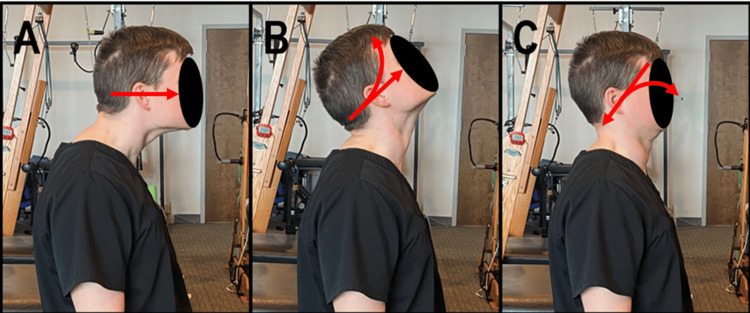
FLIP Exercise [Source: Figure 2 from Haas et al. 2024 (PMID: 39417063)]
A Note for Parents
Summer is actually one of the best times to have a child's posture and structural alignment evaluated, there's no school schedule to work around, and catching a developing pattern early makes correction significantly more achievable. If you've noticed your child carrying their head forward or slouching consistently, that's worth a conversation.
At Structural Chiropractic, we focus on the underlying structural abnormalities driving these patterns, not just the symptoms they eventually produce. A complimentary consultation is a low-barrier first step. Just tap the button below and select a time that fits in your schedule.