
Why Long Car Rides Are Hard on Your Spine (And What to Do About It)
Long travel days, whether you're behind the wheel for three hours or crammed into a middle seat, are among the most structurally stressful things you can put your body through. Simply because of the lack of movement.
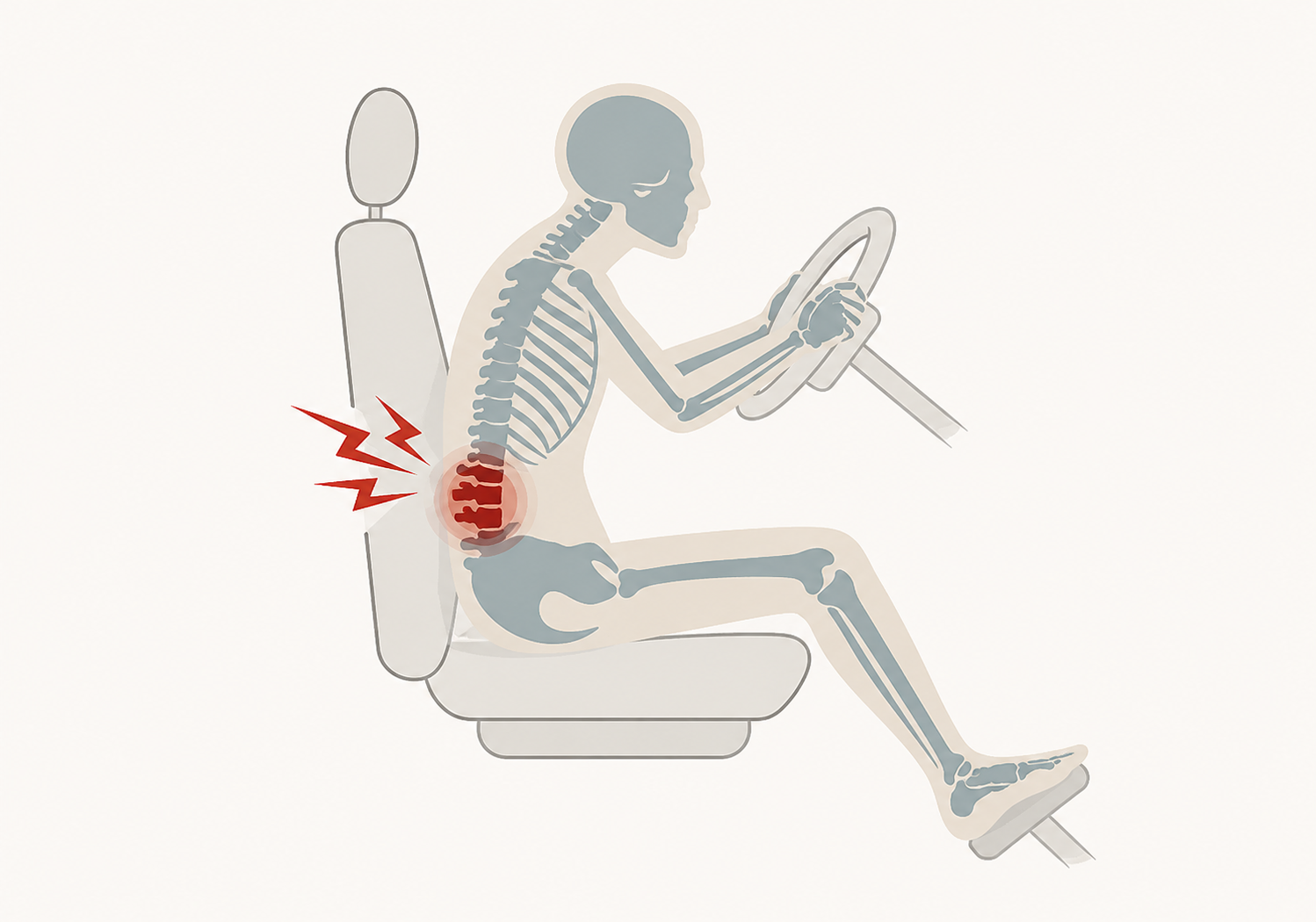
Sustained sitting in a fixed position creates a specific combination of stresses: forward head position, a flattened lumbar curve, and prolonged static loading that slowly accumulates on already vulnerable structural areas. If you have an underlying structural abnormality, a long travel day can be enough to aggravate it significantly.
Here's how to protect yourself, whether you're on the road or in the air.
If You're Driving or Riding
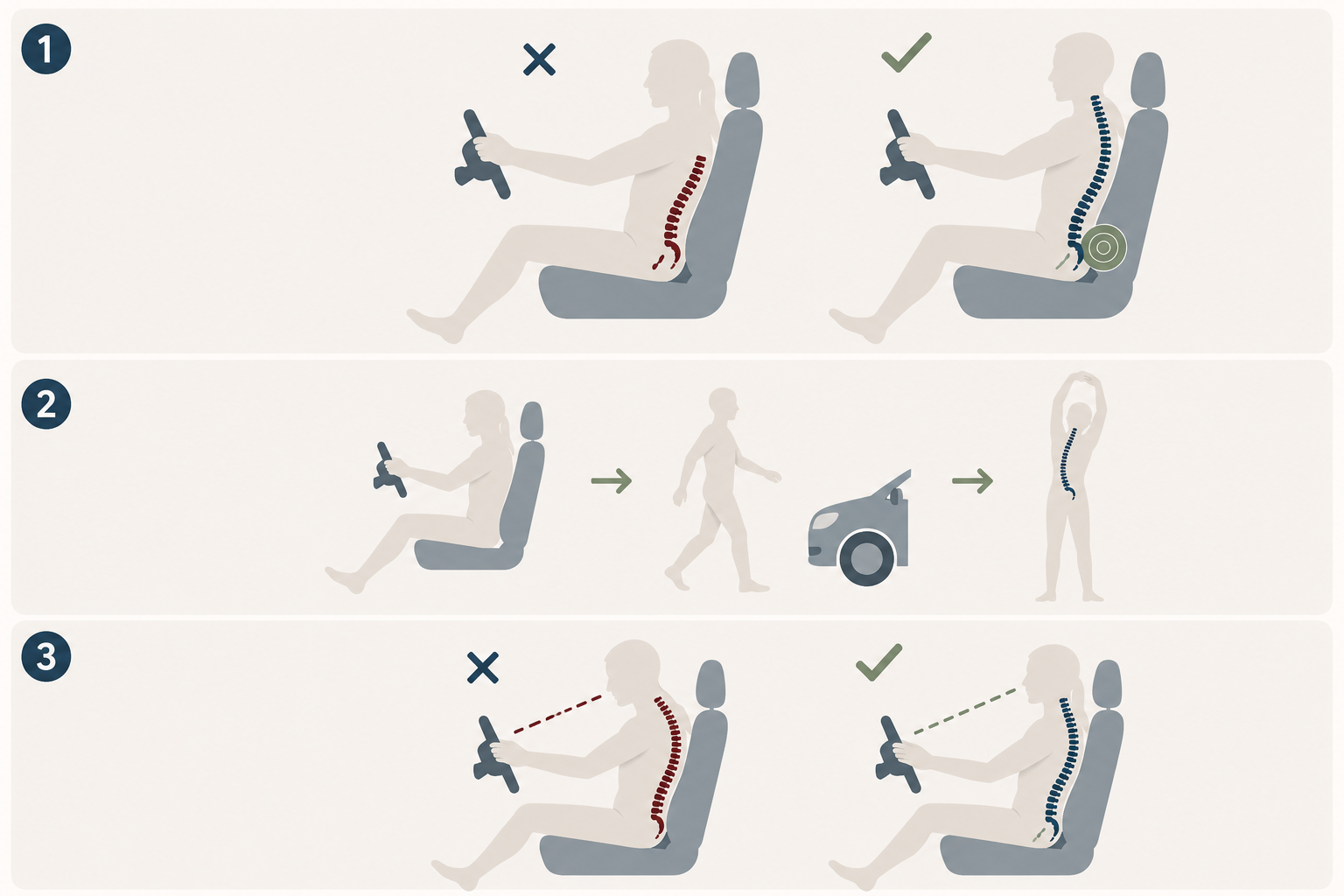
1. Support your lumbar curve
Most car seats are designed for comfort, not structural support. A small rolled towel or lumbar cushion placed at your lower back helps maintain the natural curve rather than allowing it to flatten against the seat, which, over hours, creates significant compressive stress on the lumbar discs.
2. Stop and move every 60–90 minutes
Static loading compresses spinal discs over time and reduces their ability to absorb shock. Brief stops to stand, walk, and gently extend your spine go a long way toward managing that accumulation, especially on drives longer than two hours.
3. Seat position matters more than you think
Sitting too far from the wheel encourages you to reach forward, which rounds the thoracic spine and pushes the head forward. Adjust so your elbows are slightly bent and your back stays in full contact with the seat throughout the drive.
If You're Flying
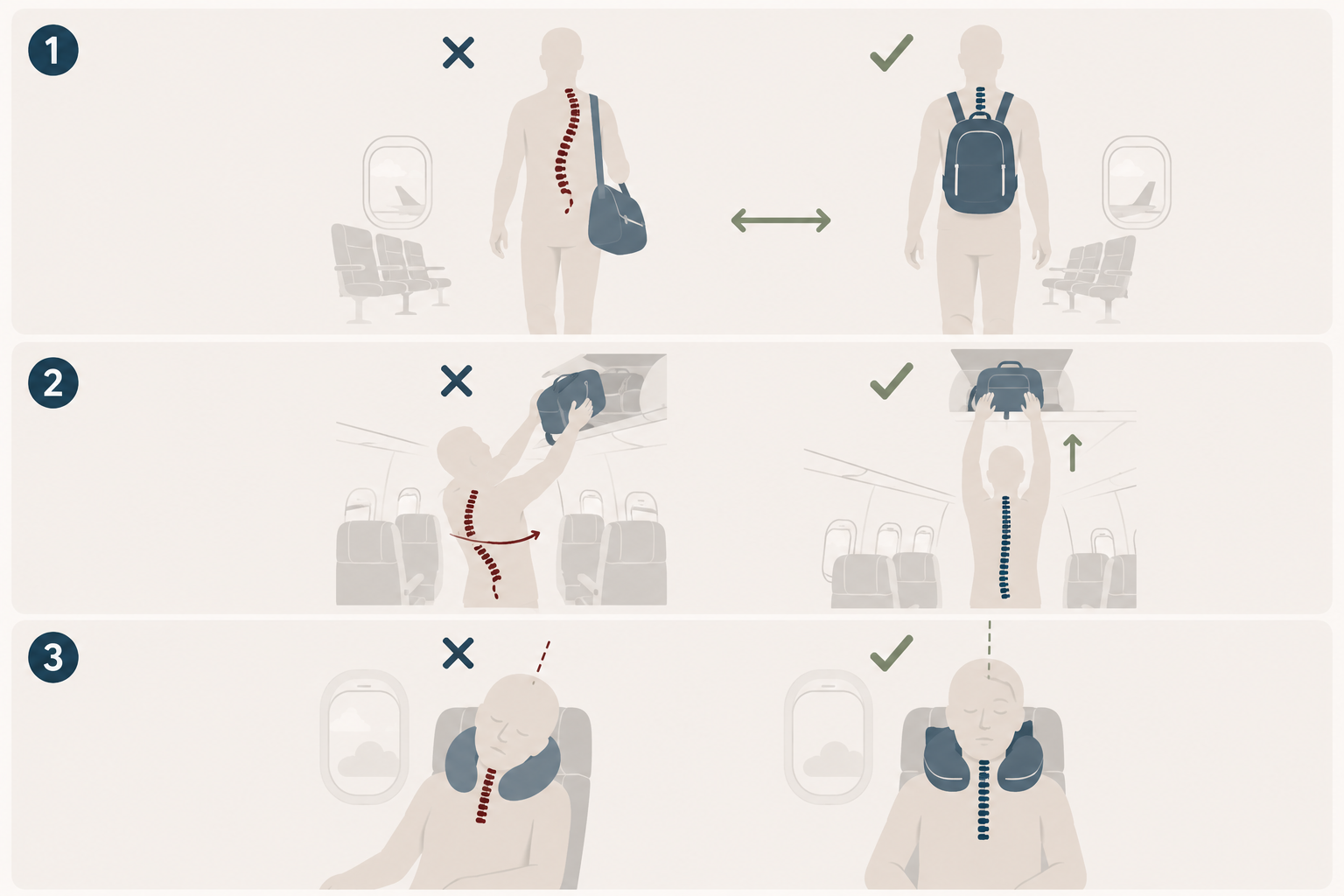
1. Watch how you carry your bag
Slinging a heavy carry-on over one shoulder through a terminal repeatedly loads one side of your spine asymmetrically. Use both straps of a backpack whenever possible, or switch sides frequently. Asymmetric loading creates asymmetric stress.
2. Be strategic about the overhead bin
Lifting a heavy bag overhead while twisting in a tight aisle is one of the most mechanically awkward movements you can make. Face the bin directly, keep the load close to your body, and lift straight up, don't rotate mid-lift.
3. Use a neck pillow that actually supports
Most travel pillows add padding without supporting the cervical curve. If you tend to sleep leaning to one side, your cervical spine spends hours in lateral flexion under load. Look for a pillow with enough firmness to keep your head centered over your shoulders.
Travel is one of those situations where small adjustments made consistently throughout the day add up to a very different outcome for your spine. The goal is to keep your structural foundation as neutral as possible so you arrive feeling good, rather than needing to recover.
Come back feeling your best.
If travel leaves you stiff, sore, or off, don't wait it out. At Structural Chiropractic, we take a different approach focusing on the underlying structural abnormalities that make your body more vulnerable to days like these, not just the symptoms they produce. Call us at (412) 835-4844 or visit structuralchiropit.com to schedule your complimentary consultation.