
Swimming and Your Spine: How to Make the Most of Pool Season
Swimming consistently ranks among the most recommended forms of exercise for people dealing with back pain, joint issues, and structural problems, and for good reason. But like any form of physical activity, the details matter. Stroke choice, technique, and what you do in and around the pool can make a meaningful difference between helping and hurting your spine.
With pools packed from Fourth of July weekend straight through the rest of the summer, here's what water activity actually does for your spine, what to watch out for, and how to make the most of it.
Buoyancy Unloads the Spine
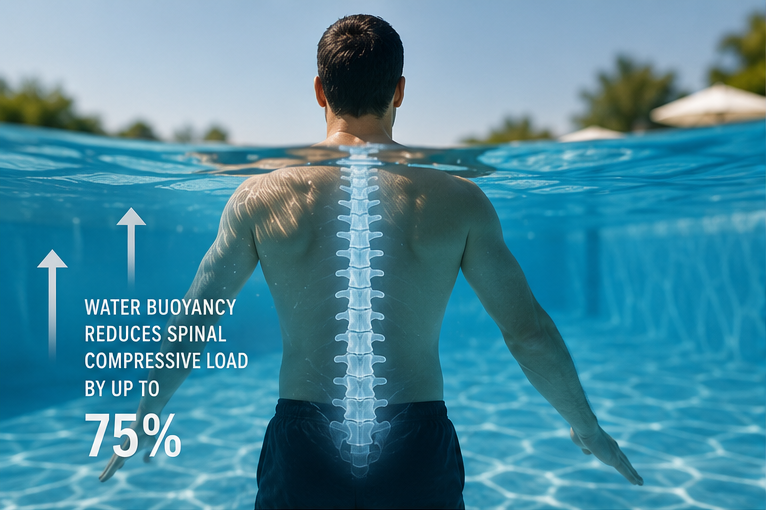
When you're submerged to your chest, water buoyancy reduces the effective compressive load on your spine by up to 75%. This can make a significant difference for people dealing with disc issues, facet joint irritation, or structural shifts that have been generating symptoms under gravitational load. Because of this buoyancy effect, movement in water may allow the spine to move through ranges of motion that would be painful or restricted on land, which is why aquatic therapy has a well-established place in rehabilitation.
Water also provides gentle, uniform resistance in all directions, which means the muscles that support and stabilize the spine get worked without the jarring impact forces of land-based exercise. For patients in active structural correction care, low-impact movement that supports muscular endurance around the spine is valuable, and the pool can be a great opportunity to reinforce the work being done in your correction plan.
Different Strokes for Different Folks
Backstroke
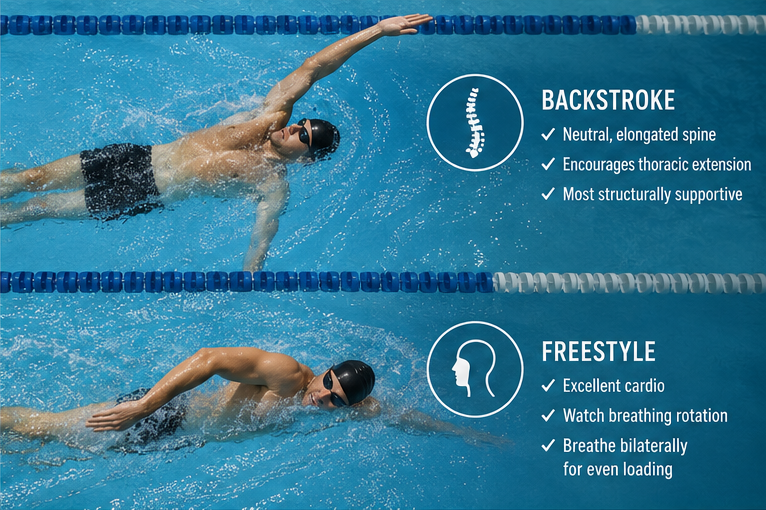
Backstroke keeps the spine in a relatively neutral, elongated position with the face up, which eliminates forced cervical rotation or extension to breathe. It encourages thoracic extension, the opposite of the forward-flexed postures most people spend their day in. For patients working to reduce thoracic hyperkyphosis or Anterior Head Syndrome (AHS), backstroke is the most structurally supportive option in the pool.
Freestyle
Freestyle is excellent cardiovascular exercise and relatively spine-friendly when technique is sound. The key structural consideration is breathing rotation, turning the head to one side repeatedly creates asymmetric cervical loading over a long swim. Bilateral breathing (i.e. alternating sides every three strokes rather than always the same side) distributes that load more evenly and is a simple habit worth developing.
Both backstroke and freestyle represent variations of the cross crawl movement pattern, which is one of the most beneficial movement patterns for spinal function. If you aren't training for a specific stroke and simply want to support your spine and posture in the water, these two are your best options. Breaststroke and butterfly require movement patterns that are less structurally favorable for most people outside of competitive training.
Pool Habits that Work Against Your Spine
Keeping your head above water
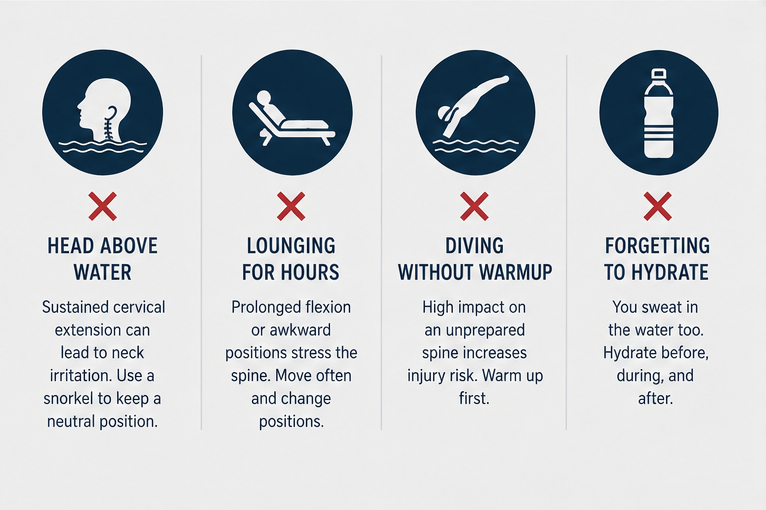
A very common recreational habit, keeping the head lifted out of the water the entire time forces sustained cervical extension. While that's often preferable to sustained cervical flexion from device use, it's likely to cause neck irritation when done for extended periods. If you prefer not to put your face in the water, a snorkel is a useful tool for maintaining a neutral cervical position throughout your swim.
Lounging for hours
Prolonged time in an inflatable float or reclined pool chair often puts the lumbar spine in sustained flexion or an awkward asymmetric position. The same rules that apply to sitting on land apply here: move regularly and don't stay in one position for extended periods, even in the water.
Diving and jumping without warming up
The compressive impact of a dive or a cannonball, especially repeatedly, sends a significant force through the spine. If you're doing this cold, the structures aren't prepared for it. A brief dynamic warmup before pool activity applies just as much as it does for any other sport.
Forgetting to hydrate
It may seem counterintuitive because the cool water masks the sensation of it, but swimming is an aerobic exercise that produces significant sweat. The same hydration principles that apply everywhere else apply at the pool too. Bring a water bottle poolside and use it.
Use the Pool Strategically This Summer
Water activity done well is one of the most structurally supportive things you can do this summer, especially if you're in an active phase of structural correction. Choose your strokes wisely, keep the habits above in mind, and your spine will get as much out of the water as the rest of you does.
If you have questions about how swimming or other summer activities fit into your structural correction plan, we're happy to talk through it. Call us at (412) 835-4844, visit structuralchiropit.com, or tap the button below to schedule your complimentary consultation.