
Your Spine and Your Gut Are Connected: What You Eat Affects Your Structure
Most people think of the spine and the gut as completely separate systems. They're not. Like everything in your body, the relationship between spinal alignment, the autonomic nervous system, and digestive function is deeply interconnected, and it goes both ways. Understanding that connection is one of the most practical things you can do for your structural health.
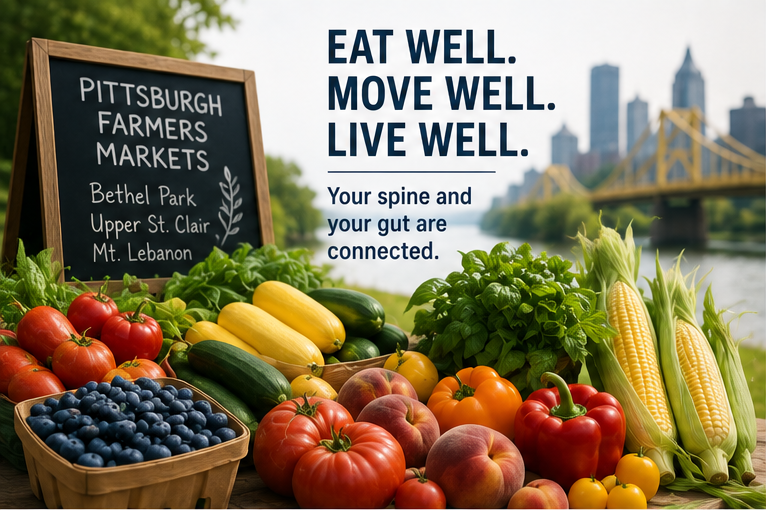
Late July is peak season at Pittsburgh's local farmers markets. The Bethel Park, Upper St. Clair, and Mt. Lebanon farmers markets are overflowing right now with some of the most anti-inflammatory produce available all year. This week we'll look at how what you eat affects your structure, and on the flip side, how your structural alignment affects your gut.
How Structural Abnormalities Affect Your Digestion
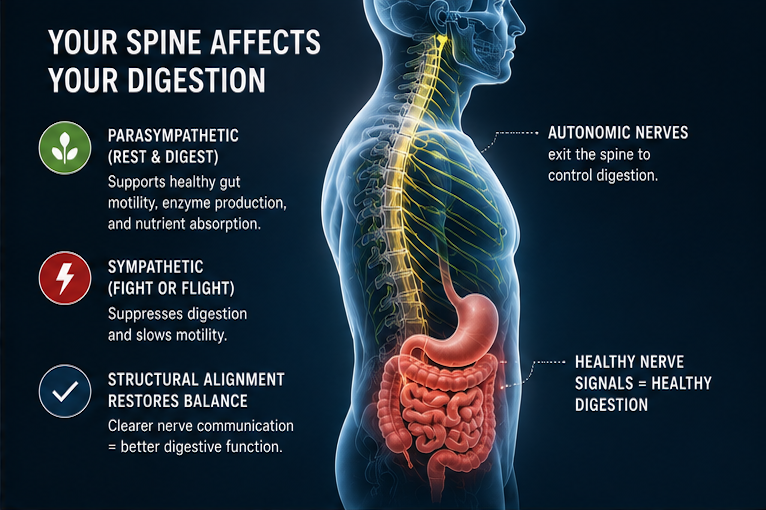
Your autonomic nervous system runs through your spine
The autonomic nervous system, the part of your nervous system that controls involuntary functions like heart rate, breathing, and digestion, exits the spinal cord at specific vertebral levels. The parasympathetic branch, often called "rest and digest," is responsible for healthy gut motility, stomach acid secretion, enzyme production, and the rhythmic movement of food through the digestive tract. The sympathetic branch, "fight or flight," suppresses these functions when active. Think of them as the gas and brake pedal of your digestive system.
When structural abnormalities create mechanical irritation or pressure along the thoracic or upper lumbar spine, the normal balance between these two branches can be disrupted. Patients with structural shifts in the mid-back often describe symptoms like bloating, constipation, reflux, or sluggish digestion that have no obvious dietary cause. It's important to understand that this isn't a gut problem; rather, the signal getting to it is compromised from neurostructural obstruction. This is the brain-gut axis in action, and the spine, which houses and protects that connection, is a critical part of it.
Improving structural alignment removes that neurological obstruction and restores clearer communication between the brain and the gut. Patients frequently report improvements in digestive regularity and comfort as their structural correction progresses, often when they never came in with a digestive complaint in the first place.
How Your Gut Affects Your Structure
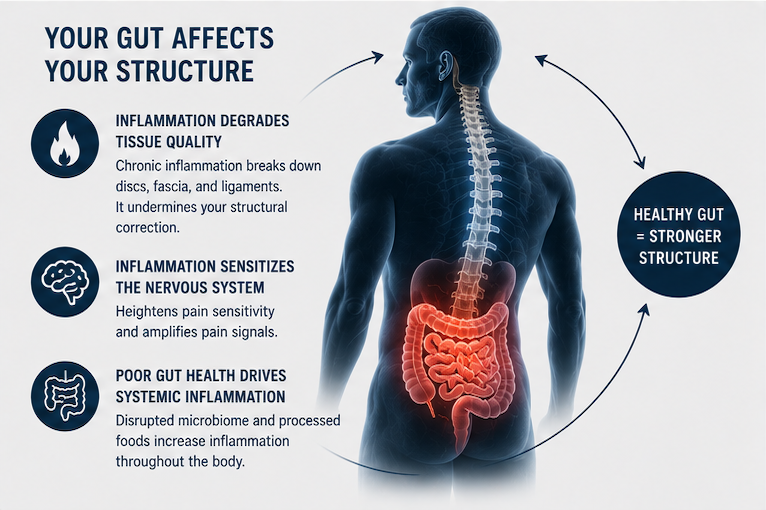
The relationship also runs the other direction. A disrupted gut microbiome, driven by a diet high in processed foods, refined sugar, seed oils, and ultra-processed ingredients, triggers systemic low-grade inflammation throughout the body. That inflammation has direct consequences for structural health.
Inflammation degrades disc and connective tissue quality
Chronic systemic inflammation accelerates the breakdown of the extracellular matrix, the structural scaffolding that fascia, spinal discs, and ligaments are built on. The Connective Tissue Restoration work done in care is working to rehydrate and restore this tissue. A pro-inflammatory diet actively degrades it. Going through structural correction while eating a pro-inflammatory diet is like walking the wrong way up an escalator, it simply takes more effort and time to get where you're going.
Inflammation sensitizes the nervous system
Inflammatory molecules cross the blood-brain barrier and sensitize central pain processing pathways, meaning the nervous system becomes more reactive and pain signals are amplified. This is one reason why some patients experience more pain than their structural findings alone would predict. Reducing systemic inflammation quiets that amplification and allows the nervous system to operate more effectively, making the correction work more efficiently.
What to Eat to Support Your Structure
At the time of this publication, late July in Pittsburgh, is one of the best times of year to eat in a way that directly supports structural health. Here's what's in peak season right now and what each brings to your internal environment.
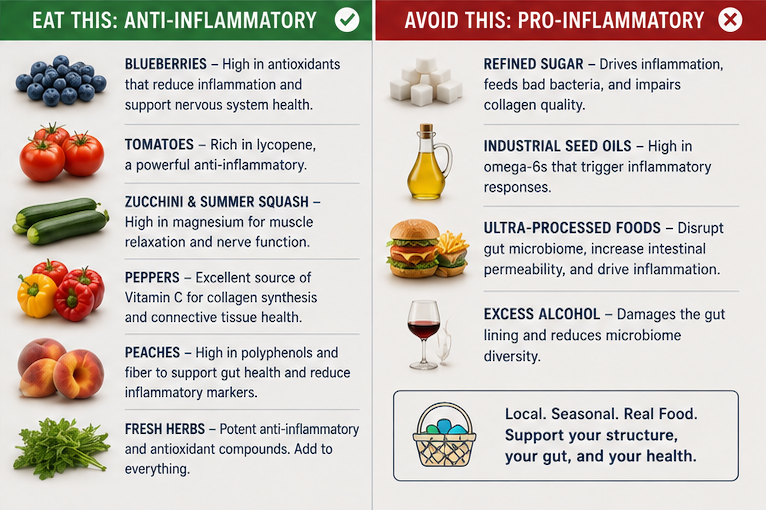
Anti-inflammatory
Blueberries are among the highest antioxidant loads of any food available, directly reducing oxidative stress and neuroinflammation.
Tomatoes are rich in lycopene, a powerful anti-inflammatory compound, local heirloom varieties available now are nutritionally superior to anything in a grocery store year-round.
Zucchini and summer squash are high in magnesium, which supports muscle relaxation, sleep quality, and nerve function.
Peppers are exceptionally high in Vitamin C, which is essential for collagen synthesis, and since collagen is the primary structural protein in spinal discs, ligaments, and fascia, Vitamin C is one of the most underrated nutrients for structural health.
Peaches are high in polyphenols and fiber, supporting both gut microbiome diversity and reduction of inflammatory markers.
Fresh herbs (such as basil, parsley, cilantro) are gram for gram some of the most potent anti-inflammatory and antioxidant compounds available, and they're abundantly accessible at local markets right now.
Pro-inflammatory
Refined sugar and high-fructose corn syrup directly spike inflammatory cytokines, feed pathogenic gut bacteria, and impair collagen quality, the most significant dietary driver of systemic inflammation for most people.
Industrial seed oils (soybean, canola, corn, sunflower, and vegetable oils) are extremely high in omega-6 fatty acids that drive the inflammatory cascade when consumed in excess relative to omega-3s. These are in nearly every processed and fried food.
Ultra-processed foods disrupt gut microbiome diversity, increase intestinal permeability, and drive systemic inflammation.
Excess alcohol directly damages the gut lining, reduces microbiome diversity, and increases intestinal permeability, occasional and moderate is one thing, but daily or heavy use is a significant inflammatory burden on the structural system.
Food Is Part of the Correction Plan
The structural alignment and nervous system communication work done in the office creates the conditions for correction. What you eat between visits either supports that environment or fights against it. Pittsburgh's farmers markets are giving you some of the best anti-inflammatory tools available right now. They are local, seasonal, and at peak nutritional value.
If you're curious about which specific foods or supplements might best support your structural correction progress call us at (412) 835-4844, visit structuralchiropit.com, or tap the button below to schedule your complimentary consultation.